SIG P365 Problems: Common Issues, Causes, and Solutions
Few handguns have changed the concealed carry market as dramatically as the SIG P365.
Before its introduction, most shooters accepted an uncomfortable compromise. If you wanted a pistol that disappeared easily under a T-shirt, you usually accepted limited magazine capacity and a grip that often left your little finger searching for somewhere to rest. If you wanted more ammunition and better shootability, you generally carried something closer to a compact duty pistol and learned to live with the additional bulk.
The P365 challenged that assumption.
The SIG P365 is widely regarded as a reliable concealed carry pistol, but some owners have reported failures to feed, return-to-battery issues, light primer strikes, magazine concerns, and premature finish wear. Many reported malfunctions can be traced to ammunition, magazines, maintenance, shooter technique, or early-production pistols rather than widespread problems affecting current models. Any carry gun should be thoroughly tested before being trusted for defensive use, regardless of manufacturer.
Here was a handgun that managed to hold more ammunition than many competitors while remaining remarkably compact. It wasn't simply another micro-compact entering an already crowded market. It fundamentally changed what shooters expected from the category, forcing nearly every major manufacturer to rethink its concealed carry lineup over the following years.
Success on that scale rarely comes without scrutiny.
Almost immediately after the pistol reached consumers, reports of reliability concerns began appearing online. Some involved broken strikers. Others described light primer strikes, failures to return fully to battery, or premature wear. As tends to happen whenever a major new firearm is introduced, individual experiences quickly merged into a much larger internet narrative.
Years later, that narrative still follows the pistol.
Someone researching the P365 today will often encounter discussions from the pistol's earliest production runs mixed together with comments from owners of current-production guns. Without context, it becomes difficult to know which concerns remain relevant, which have been addressed, and which were never widespread to begin with.
That's unfortunate, because it prevents many buyers from asking the more useful question.
Not whether the SIG P365 has ever experienced problems.
Every successful handgun eventually accumulates reports of malfunctions, broken parts, and isolated defects. Mechanical devices built in large numbers inevitably do.
The better question is whether those issues represent normal ownership experiences today, whether they're easily diagnosed, and whether they should influence your decision to carry the pistol for personal defense.
Like most worthwhile questions involving defensive firearms, the answer isn't particularly simple.
The P365's Reputation Was Shaped Early
One reason discussions about the P365 can become confusing is that they often blend together two very different periods in the pistol's history.
Early production guns received an extraordinary amount of attention. Some owners reported striker failures, premature component wear, and reliability concerns that understandably generated discussion throughout the firearms community. Because the P365 represented such an important product launch for SIG Sauer, every reported issue attracted far more attention than similar problems might have on a less prominent handgun.
That attention wasn't entirely unfair.
Defensive handguns occupy a unique place in the shooting world because reliability isn't simply a desirable feature. It's the foundation upon which every other characteristic depends. Trigger quality, ergonomics, capacity, sights, and optics compatibility all become secondary if the owner lacks confidence that the pistol will function when needed.
SIG responded to many of the concerns raised during those early production runs by revising internal components and making incremental improvements as manufacturing continued. That's hardly unusual within the firearms industry. Nearly every manufacturer refines products after they reach large-scale production. The difference is that the P365's popularity meant those revisions unfolded under an unusually bright spotlight.
Today, buyers often encounter discussions about the pistol without realizing when those experiences occurred.
An internet post describing a malfunction from six or seven years ago may appear beside a current review written last month. Both become part of the same search results, even though they may describe very different versions of the pistol.
That distinction matters.
It doesn't erase early concerns, nor should it. Historical problems deserve acknowledgment because they help explain why certain questions continue to appear. At the same time, evaluating a current-production handgun solely through the lens of its earliest manufacturing period can produce an incomplete picture.
The P365 should be judged where it stands today, while still recognizing how it arrived there.
Our complete SIG P365 review provides a broader look at the pistol’s dimensions, capacity, accuracy, ergonomics, and everyday-carry performance outside the reliability discussion.
Reliability Is Earned, Not Assumed
Spend enough time around firearms instructors, experienced concealed carriers, or competitive shooters and you'll notice something interesting.
The people who trust their equipment the most are often the least willing to assume anything about it.
That may sound contradictory, but experience has a way of changing how shooters think about reliability.
A new gun owner often asks whether a particular model is reliable. Someone who has carried a handgun for years usually asks a different question.
Has this individual pistol proven itself?
There's an important distinction between those ideas.
Manufacturers build reputations over decades, and some certainly enjoy stronger track records than others. Glock's reputation for durability wasn't created overnight. Neither was SIG Sauer's position within the defensive handgun market. Those histories provide valuable context, but they don't replace personal testing.
Every defensive handgun deserves the opportunity to earn its owner's confidence.
That process begins at the range.
Many experienced carriers have personal benchmarks before any new pistol becomes part of their everyday carry routine. Some prefer several hundred consecutive rounds without malfunction. Others insist on extensive testing with their chosen defensive ammunition, followed by drills involving reloads, one-handed shooting, and realistic presentations from concealment. The exact standard varies, but the philosophy remains remarkably consistent.
Confidence should come from demonstrated performance rather than assumptions.
Viewed through that lens, the P365 becomes easier to evaluate.
Its reputation isn't based solely on marketing claims, nor should it be judged exclusively by isolated internet anecdotes. Instead, it should be judged the same way every serious defensive handgun should be judged: through consistent function over meaningful amounts of range time.
That standard protects buyers regardless of brand.
Buyers weighing reliability, capacity, grip size, and concealment should review this SIG P365 vs. Glock 43X comparison before deciding whether another platform better fits their priorities.
Understanding Feeding and Return-to-Battery Issues
If there's one category of malfunction that generates more concern than almost any other among concealed carriers, it's a pistol that hesitates during the feeding cycle.
Whether the slide stops just short of full lockup, a cartridge fails to chamber correctly, or the pistol refuses to return completely to battery, the experience naturally undermines confidence. Defensive handguns operate under the expectation that every press of the trigger should be preceded by a fully functioning cycle of operation. Any interruption deserves attention.
The encouraging news is that these malfunctions often have more than one possible cause.
Ammunition sits near the top of the list. Practice ammunition varies considerably in consistency, and some loads simply produce different recoil impulses than others. Bullet profiles can also influence how cartridges interact with feed ramps, particularly during the first few hundred rounds through a new pistol.
Magazines deserve equal attention.
Most experienced armorers will tell you that magazines remain one of the most common sources of reliability complaints across virtually every semi-automatic handgun platform. Feed lips, spring tension, follower movement, and simple wear all contribute to reliable feeding. When troubleshooting a pistol, isolating magazines one at a time frequently provides valuable information before anyone begins suspecting larger mechanical issues.
Maintenance also enters the conversation more often than many owners realize.
The P365 is a compact, tightly engineered handgun with relatively short operating distances. Like many pistols in its class, it generally responds well to proper lubrication and regular cleaning. Excessive fouling, dried lubricant, or accumulated debris can influence cycling long before obvious failures appear.
Shooter technique occasionally contributes as well.
The phrase "limp-wristing" has become something of a cliché in online firearm discussions, sometimes used too casually whenever a malfunction occurs. Yet there remains a kernel of truth behind the concept. Extremely lightweight pistols rely on a relatively stable shooting platform to cycle consistently, particularly when using lighter practice ammunition. While grip technique should never be used to dismiss legitimate mechanical concerns, it's also worth recognizing that compact carry pistols can be less forgiving of inconsistent fundamentals than larger service pistols.
The important point is that feeding issues should be approached systematically rather than emotionally.
One malfunction tells you very little.
A pattern begins to tell a story.
Persistent failures with multiple magazines, different ammunition types, and proper maintenance deserve further investigation. An isolated malfunction during the first range session with inexpensive practice ammunition often deserves considerably less alarm.
That measured approach ultimately produces better decisions than assuming either that every malfunction indicates a defective firearm or that every malfunction should simply be ignored.
The truth usually lives somewhere between those two extremes.
Extraction, Striker, and Ignition Concerns
While failures to feed usually attract the most attention, they're hardly the only malfunctions discussed by P365 owners. Failures to extract, light primer strikes, and striker-related concerns have all appeared in online conversations over the years, although they don't necessarily point toward the same underlying causes.
Extraction problems deserve a methodical approach because they're influenced by several interacting components. Ammunition quality plays a significant role, particularly with inexpensive practice loads that may vary in pressure or case dimensions. Dirty chambers can make extraction more difficult, especially in compact pistols that operate with relatively short slide travel. Recoil spring condition, extractor wear, and accumulated fouling all deserve consideration before anyone concludes that the pistol itself is fundamentally flawed.
The same deliberate mindset applies to light primer strikes.
Early discussions surrounding the P365 often focused on striker-related concerns, and those conversations continue to surface whenever someone researches the pistol today. It's important to recognize that not every light primer strike indicates a broken striker or defective firing mechanism. Hard primers, excessive fouling inside the striker channel, improperly installed aftermarket components, or ammunition inconsistencies can all contribute to ignition failures.
None of that means genuine mechanical problems never occur.
Every manufacturer occasionally produces defective parts, and every mechanical system has components that eventually wear. What separates responsible troubleshooting from internet speculation is the willingness to eliminate simpler explanations before assuming the worst. A pistol that repeatedly produces light primer strikes across multiple brands of quality ammunition after proper cleaning deserves attention from SIG Sauer or a qualified gunsmith. A single hard primer during an afternoon of inexpensive range ammunition tells you comparatively little.
The distinction matters because defensive handguns should inspire confidence rather than anxiety. Owners shouldn't ignore recurring malfunctions, but neither should they assume every isolated failure represents evidence of a widespread design flaw.
Not Every Complaint Is a Reliability Problem
One consequence of the P365's popularity is that virtually every aspect of the pistol has been scrutinized online.
Some of those discussions involve legitimate mechanical concerns.
Others involve characteristics that are largely cosmetic or subjective but become magnified simply because so many people own the platform.
Finish wear provides a good example.
The P365 is a carry gun, and carry guns live difficult lives. They're exposed to perspiration, body oils, lint, dust, humidity, temperature changes, and constant contact with clothing and holsters. Cosmetic wear is an inevitable part of that environment. Some owners notice finish wear sooner than expected, while others carry the same pistol for years with minimal visible change. Climate, maintenance habits, and carry methods all influence those experiences.
Surface rust generates similar conversations.
A handgun carried against the body every day exists in an environment that encourages corrosion. Even pistols with excellent protective finishes can develop surface oxidation if moisture remains trapped against the metal for extended periods. Regular inspection, light lubrication, and wiping down the pistol after carry go a long way toward preventing these issues, regardless of manufacturer.
The same philosophy applies to sights and trigger feel.
Night sights eventually lose brightness. Polymer components develop wear marks. Triggers smooth out over time as parts mate together. None of those characteristics necessarily indicate that something is wrong with the pistol. They simply reflect normal ownership of a firearm that is intended to be carried regularly rather than admired in a display case.
It's easy to mistake normal wear for impending failure, particularly when researching a handgun online. Understanding the difference between cosmetic changes and genuine reliability concerns helps owners focus their attention where it belongs.
Diagnosing Problems Without Becoming an Amateur Gunsmith
One of the unintended consequences of internet firearm culture is the temptation to solve every problem by immediately replacing parts.
Entire industries have grown around aftermarket triggers, strikers, springs, guide rods, connectors, and internal components. Some of those products serve legitimate purposes. Others simply encourage owners to modify pistols before they've fully understood the problem they're trying to solve.
That's rarely the best approach for a defensive handgun.
When a carry gun begins exhibiting unusual behavior, the goal shouldn't be to become an amateur armorer overnight. It should be to isolate variables carefully and methodically.
Start with the simplest questions.
Has the pistol been properly cleaned and lubricated?
Has the malfunction occurred with multiple magazines?
Has it occurred with more than one type of quality ammunition?
Does the problem repeat consistently, or was it an isolated event?
Have any aftermarket parts been installed that could influence function?
Working through those questions often provides far more useful information than immediately ordering replacement components.
If a problem persists despite proper maintenance, factory magazines, quality ammunition, and consistent shooting technique, the next step is not more experimentation. It's contacting SIG Sauer or seeking assistance from a qualified gunsmith familiar with the platform.
Defensive firearms occupy a different category than recreational range guns. Reliability modifications should never become guessing games.
When It's Time to Contact SIG Sauer
One of the strengths of purchasing a handgun from an established manufacturer is access to factory support.
Owners sometimes hesitate to use that support because they assume every malfunction should be solved independently. While basic maintenance and troubleshooting are important skills, there comes a point where factory evaluation is simply the smarter decision.
Persistent failures to feed, repeated light primer strikes with quality ammunition, broken components, unusual trigger behavior, cracked parts, or recurring failures to return fully to battery all deserve professional attention.
Likewise, any malfunction that raises questions about safe operation should end the troubleshooting process immediately.
A carry gun should inspire confidence.
If the owner no longer trusts its mechanical condition, continuing to experiment at home rarely improves the situation.
SIG Sauer has spent decades supporting duty and defensive pistols, and making use of that support is often the quickest path toward restoring confidence in the firearm.
Does Any of This Change the P365's Role as a Carry Gun?
Perhaps the most important question isn't mechanical at all.
It's practical.
Should concerns about reported P365 problems prevent someone from carrying one today?
For most owners, the answer depends less on internet discussions than on personal experience.
Every defensive handgun should prove itself before being trusted. That principle applies equally to a P365, a Glock 43X, a Smith & Wesson Shield Plus, or any other carry pistol. Confidence comes from rounds fired, magazines tested, and familiarity developed over time. It doesn't come from marketing brochures, online arguments, or brand loyalty.
The P365 continues to occupy its place near the top of the concealed carry market because it offers a compelling balance of size, capacity, shootability, and practical everyday carry characteristics. Those strengths remain just as relevant today as they were when the pistol first changed expectations for the micro-compact category.
The existence of reported problems doesn't erase those strengths.
Neither should those strengths prevent owners from addressing legitimate concerns if they arise.
The healthiest approach is neither blind loyalty nor reflexive skepticism.
It's thoughtful evaluation.
The broader SIG P365 family now includes several grip lengths, slide configurations, capacities, and carry roles, making it important to identify the exact model involved when researching a reported problem.
Your Holster Is Part of the Reliability Equation
Most discussions about handgun reliability focus exclusively on internal components.
They shouldn't.
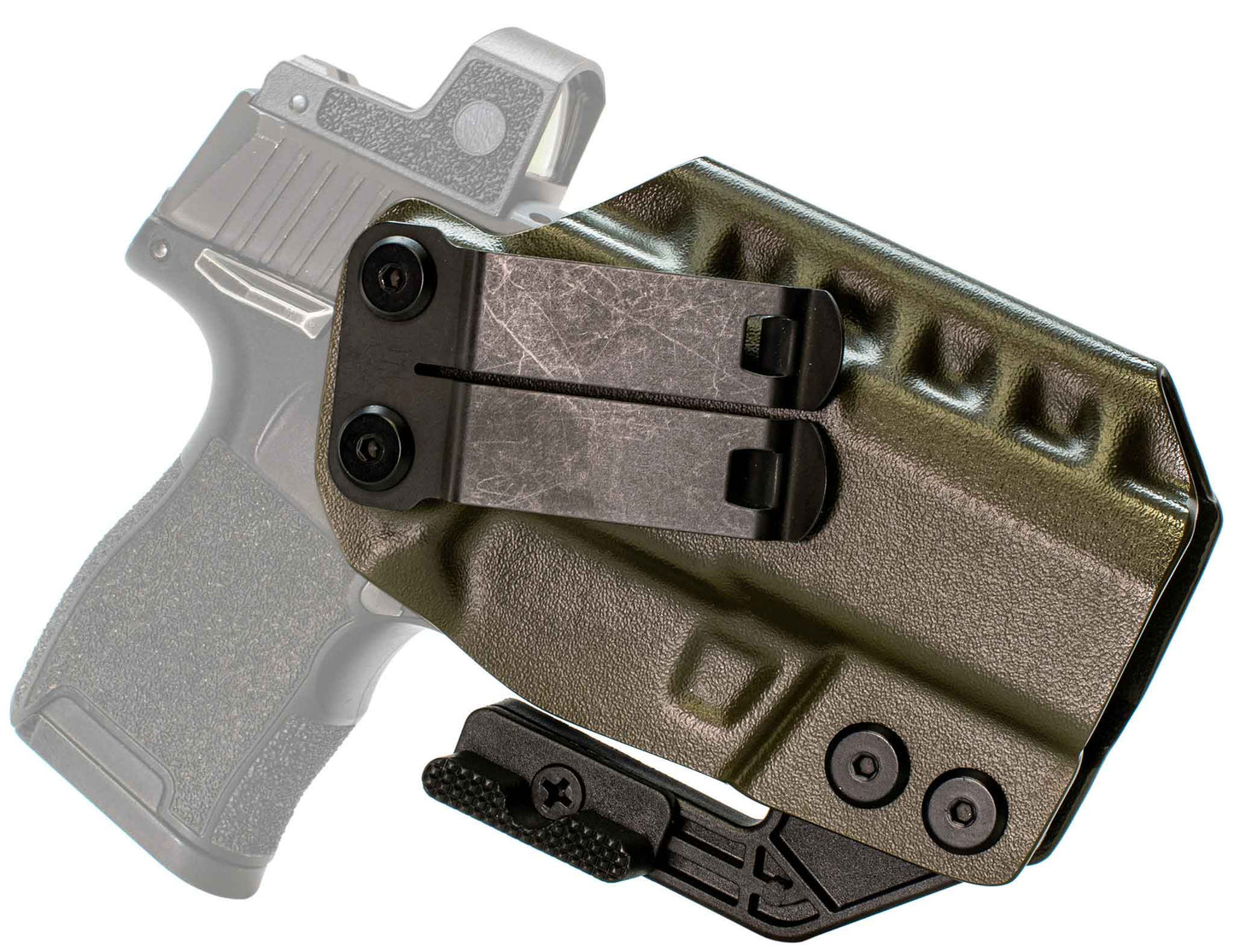
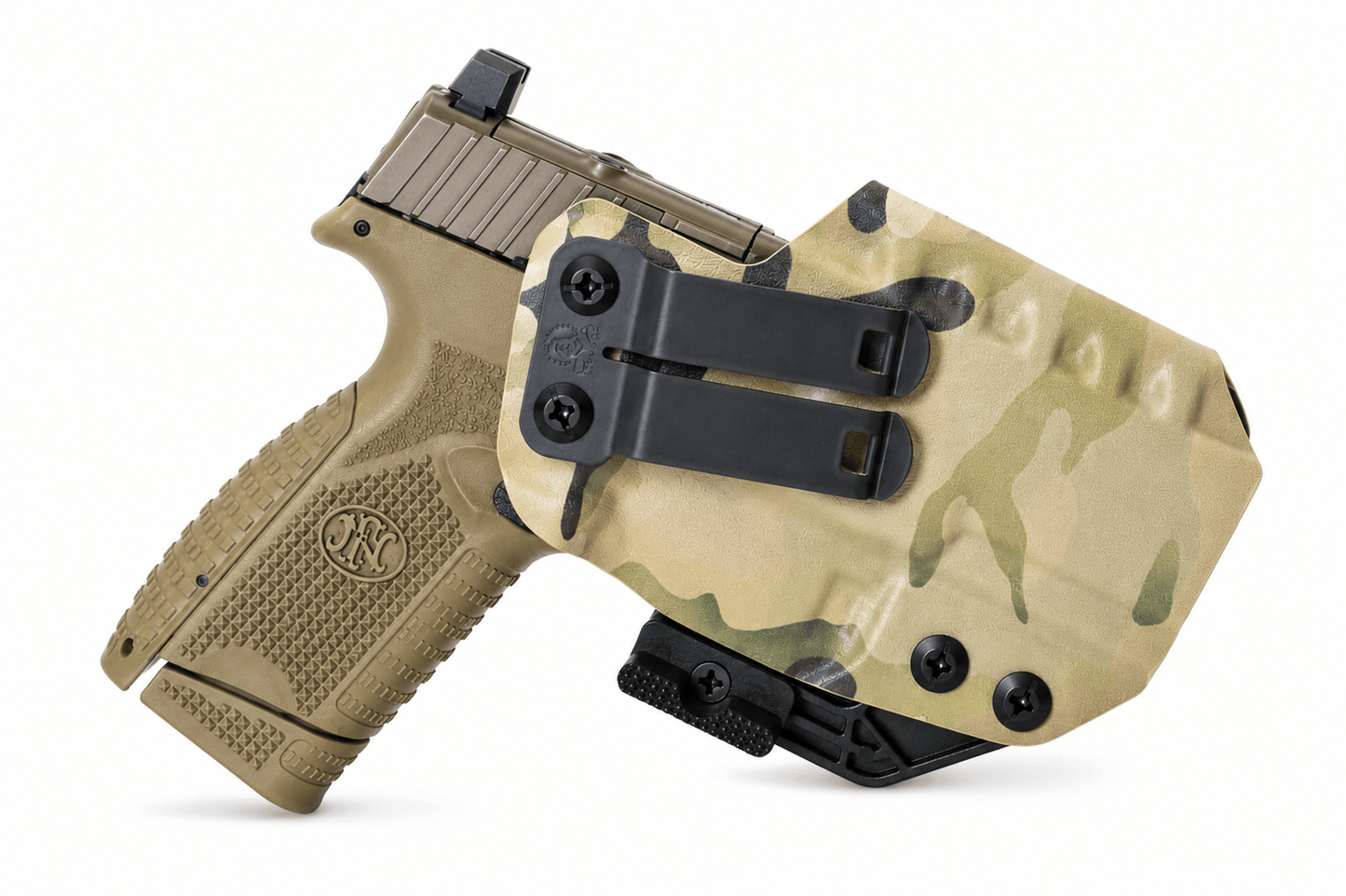
A carry pistol spends far more time inside a holster than it does being fired, and the quality of that holster influences everything from safety to maintenance. A poorly fitting holster can expose the pistol to unnecessary debris, encourage excessive movement during daily activity, or leave portions of the trigger guard insufficiently protected. Conversely, a properly designed holster keeps the pistol secure, protects the trigger, shields much of the firearm from sweat and lint, and allows for a consistent draw every time the gun is needed.
If you're carrying a P365 every day, the holster deserves just as much attention as the pistol itself.
For model-specific options, CYA Supply Co. offers holsters designed for the SIG P365, P365X, P365XL, and P365 X-Macro, giving each variant proper retention and full trigger guard coverage instead of relying on one-size-fits-all designs.
A properly fitted SIG P365 holster protects the trigger, maintains dependable retention, and helps shield the pistol from the lint, moisture, and movement associated with daily carry.
Final Thoughts
The SIG P365 occupies an unusual place in modern firearms history because it succeeded so completely that its earliest growing pains became part of its permanent reputation. Years after the first production guns left the factory, conversations about those early issues still shape how many shooters view the platform. That history deserves acknowledgment, but it shouldn't become the only lens through which today's pistols are evaluated.
Current-production P365s have earned their place in holsters across the country by doing exactly what concealed carry pistols are expected to do: combining excellent capacity with manageable size, practical shootability, and dependable everyday performance. Like every defensive firearm, they still deserve careful testing before being trusted, thoughtful maintenance throughout their service life, and honest evaluation if problems arise.
The best carry gun isn't the one with the fewest internet discussions surrounding it. It's the one that has proven itself in your hands, with your magazines, your ammunition, and your training. Once that confidence has been earned, the conversation shifts away from online speculation and back toward what matters most—carrying a pistol you're prepared to rely on if the day ever comes when you truly need it.
If you've chosen the SIG P365 as your everyday carry pistol, finish the system with a holster designed specifically for the gun you're trusting. Proper retention, complete trigger guard coverage, dependable fit, and all-day comfort are just as important as reliability when the goal is carrying consistently and confidently.
Anyone still uncomfortable with the platform should compare the best micro-compact 9mm pistols based on reliability, shootability, size, and ease of use rather than selecting a replacement solely from internet reputation.
Frequently Asked Questions
Are SIG P365 reliability problems fixed?
Most concerns associated with the earliest production pistols have been addressed through ongoing manufacturing revisions. Current-production pistols generally enjoy a strong reputation, though every defensive handgun should still be tested thoroughly.
Did SIG Sauer recall the P365?
Rather than a broad recall affecting all pistols, SIG has made running production changes over time while continuing to support customers experiencing legitimate issues.
What causes light primer strikes on the P365?
Possible causes include ammunition, fouling in the striker channel, worn components, or mechanical issues requiring factory inspection.
Why won't my P365 return fully to battery?
Magazine condition, ammunition, lubrication, fouling, recoil spring condition, or shooter technique may all contribute. Persistent issues should be evaluated professionally.
Are failures to feed common?
Most owners experience reliable function, but feeding issues can occur with worn magazines, poor ammunition, or inadequate maintenance.
Can aftermarket triggers cause reliability problems?
They can. Internal modifications sometimes affect ignition or trigger function, which is why many experienced carriers leave defensive pistols close to factory configuration.
Is the P365 still safe for concealed carry?
Yes, provided your individual pistol has demonstrated reliable performance through adequate testing.
How many rounds should I fire before carrying a P365?
Many experienced shooters prefer several hundred trouble-free rounds, including defensive ammunition, before trusting any carry pistol.
Does the P365 rust easily?
Regular exposure to sweat and humidity can affect any carry gun. Routine cleaning and light lubrication greatly reduce the risk of corrosion.
Should I replace the striker as preventive maintenance?
Most owners have no reason to do so unless inspection or factory guidance indicates otherwise.
When should I contact SIG Sauer?
Any recurring reliability issue, broken component, or concern affecting safe operation deserves factory support or evaluation by a qualified gunsmith.
Is the P365 still worth buying?
For many concealed carriers, absolutely. Its combination of capacity, size, shootability, and mature design continues to make it one of the strongest options in the micro-compact market.

Justin Hunold
Wilderness/Outdoors Expert
Justin Hunold is a seasoned outdoor writer and content specialist with CYA Supply. Justin's expertise lies in crafting engaging and informative content that resonates with many audiences, and provides a wealth of knowledge and advice to assist readers of all skill levels.